 James Hartley MRICS, Managing Surveyor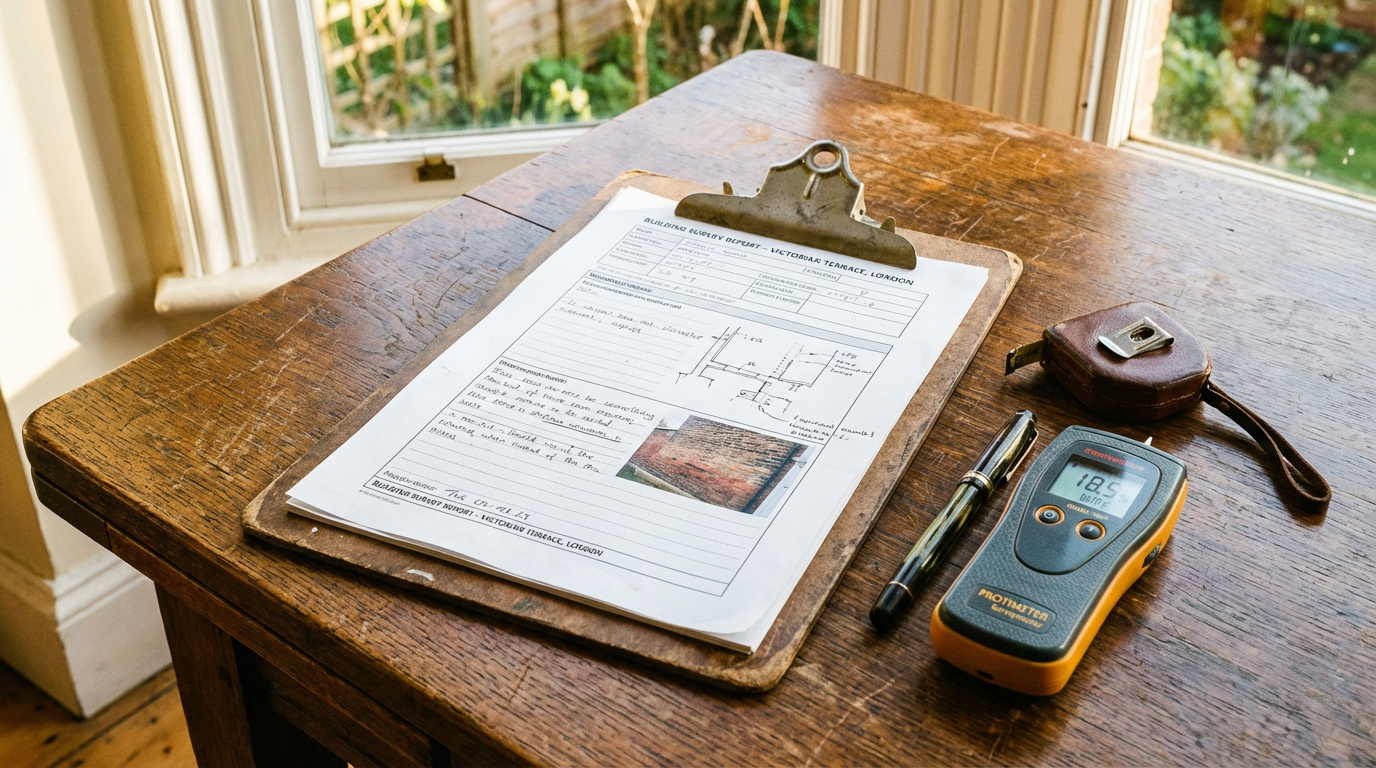
Camden is one of London's most dynamic commercial districts. From the independent retailers and market traders of Camden Town to the creative studios of King's Cross and the professional offices of Bloomsbury, commercial property here is both highly sought after and highly varied. Whether you're buying a freehold office, taking on a long lease for a shop, or inheriting a dilapidated unit from a previous tenant, knowing the true condition of your premises before you commit is not optional — it's essential.
I've been surveying commercial property across Camden for over fifteen years. In that time, I've seen businesses walk into premises that looked fine on the surface but concealed significant structural problems, asbestos-containing materials, or dilapidations liabilities worth tens of thousands of pounds. This guide is written to help Camden business owners — whether buyers, tenants, or landlords — understand what commercial property surveys involve and why they matter.
In This Guide
What Types of Commercial Building Survey Are Available?
Commercial property surveys are more varied than residential ones — largely because the reasons for commissioning them differ so widely. The main types our surveyors at Camden Surveyors provide are:
- Pre-purchase building surveys: A comprehensive assessment of a commercial building's condition prior to purchase
- Schedule of condition reports: A baseline record of a property's condition at the start of a lease
- Dilapidations surveys and schedules: An assessment of the repair obligations under a lease, typically at or near lease-end
- Reinstatement cost assessments: A valuation of rebuilding costs for insurance purposes
- Commercial valuations: Market valuations for purchase, sale, or financing
- Technical due diligence reports: Comprehensive reports covering building condition, environmental matters, planning, and statutory compliance for investors
Pre-Purchase Commercial Building Surveys
If you're buying a commercial property in Camden — whether it's a ground-floor retail unit on Camden High Street or a multi-storey office on St Pancras Way — a pre-purchase building survey should be non-negotiable. The sums involved in commercial property are significant, and the risks of buying blind are correspondingly high.
A commercial building survey carried out by Camden Surveyors will typically cover:
- The structural condition of the building — foundations, loadbearing walls, roof structure, floors
- The external envelope — roofing materials, cladding, windows, drainage
- Mechanical and electrical systems (in overview, with recommendations for specialist M&E reports where necessary)
- Condition of the interior — ceilings, walls, floors, sanitary fittings
- Presence or suspected presence of asbestos-containing materials (ACMs)
- Potential environmental concerns, including contaminated land in former industrial areas
- Planning and building regulations history (overview, recommending solicitor enquiries where needed)
- Fire safety compliance and access considerations
- An estimated schedule of repairs with indicative costs
For larger or more complex properties, we often recommend supplementing the building survey with specialist reports — particularly for M&E services, asbestos management surveys, drainage CCTV surveys, and structural engineering assessments where structural concerns are identified.
Schedule of Condition Reports
If you're taking on a commercial lease in Camden — particularly for a retail unit, office, or studio space — one of the most valuable (and most overlooked) documents you can have is a schedule of condition prepared before you sign.
A schedule of condition is exactly what it sounds like: a detailed, photographic record of the property's condition at the start of your tenancy. Its purpose is to limit your dilapidations liability at the end of the lease. Standard commercial leases in England and Wales typically contain a full repairing and insuring (FRI) covenant, which means you're responsible for returning the property to good condition when you leave — regardless of what state it was in when you arrived.
Without a schedule of condition attached to the lease, your landlord could argue at lease-end that deterioration which pre-dated your tenancy was your responsibility to repair. With a schedule of condition properly incorporated into the lease, your liability is limited to matters that have deteriorated during your occupation.
I've seen tenants facing six-figure dilapidations claims for items that were clearly in poor condition before they ever took possession of the premises. A schedule of condition costing a few hundred pounds at the outset can save tens of thousands at the end of the lease. It is, in my view, one of the best investments a commercial tenant can make.
Dilapidations Surveys and Schedules
Dilapidations are one of the most contentious areas of commercial property law — and one where having an experienced chartered surveyor on your side makes an enormous difference.
A dilapidations claim arises when a tenant has failed to comply with the repair, decoration, and reinstatement covenants in their lease. At or near lease-end, the landlord's surveyor will serve a schedule of dilapidations setting out the alleged breaches and the estimated cost of remedying them. These schedules can run to considerable sums — even for relatively modest premises.
As a tenant, you are entitled to serve a response — a counter-schedule — through your own surveyor. This is where we come in. At Camden Surveyors, we act for both landlords and tenants on dilapidations matters, and we understand the legal framework (principally the Landlord and Tenant Act 1927 and the RICS Dilapidations Guidance Note) that governs these disputes.
Key points to understand about dilapidations:
- The diminution cap: Your liability is capped at the diminution in value of the landlord's reversion — you can't be charged more than the property's loss in value
- Supersession: If the landlord intends to redevelop or refurbish the premises, they may not be able to recover the full cost of repairs
- Schedule of condition: As above, this can dramatically limit your liability
- Negotiation: The vast majority of dilapidations disputes are resolved through negotiation between surveyors, not through litigation
Asbestos and Environmental Concerns in Camden Commercial Property
Camden has a rich industrial and commercial heritage. Areas like King's Cross, Gospel Oak, and parts of Kentish Town have seen significant industrial use in the past, which means buyers and tenants need to be alert to environmental issues that can affect both the value and the usability of commercial premises.
Asbestos-containing materials (ACMs) are present in a significant proportion of commercial buildings constructed before 2000. Common locations include ceiling tiles, floor tiles, pipe lagging, roof sheets, and Artex coatings. Owners and occupiers of non-domestic premises have a legal duty to manage asbestos under the Control of Asbestos Regulations 2012. This means having an up-to-date asbestos management survey and acting on its findings.
When we survey a commercial property in Camden, we note any materials that may contain asbestos and recommend a specialist asbestos survey where necessary. We do not carry out destructive asbestos sampling ourselves, but we work closely with licensed asbestos surveyors who can provide full management and refurbishment surveys.
Environmental contamination is a separate but related concern. If you're looking at a property with a history of industrial use — a former garage, workshop, or manufacturing facility — a Phase 1 environmental desktop study is an essential part of due diligence. We can advise on when such studies are necessary and recommend specialist environmental consultants where needed.
The Camden Commercial Property Market
Understanding the local market context matters when you're making commercial property decisions. Camden's commercial market is genuinely diverse — and that diversity creates some specific surveying considerations.
Camden Town and the markets: The area around Camden Market, Camden Lock, and the surrounding streets is characterised by a mix of converted Victorian industrial buildings, railway arches, and modern retail units. Many of these buildings have complex ownership and maintenance structures. Railway arch units in particular often have specific lease terms governed by Network Rail, with unusual repair covenants.
King's Cross and St Pancras: The regeneration of this area has produced some of London's most modern commercial stock alongside sensitively restored Victorian station buildings. The area continues to evolve rapidly, creating both opportunity and complexity for commercial occupiers.
Bloomsbury and Fitzrovia: Characterised by Georgian and early Victorian commercial premises, many in conservation areas. These can carry significant repair obligations and may have restrictions on alteration works under listed building consent requirements.
Kentish Town and Gospel Oak: More traditional neighbourhood commercial premises, often with mixed-use upper floors. These can represent good value but often require careful structural and services assessment.
Case Study: Schedule of Condition Saves Camden Tenant £45,000
A creative agency contacted us when they were about to take on a lease for a first-floor studio space above a retail unit on Camden High Street. The landlord's solicitors were pushing for a quick exchange, and the client was under pressure to skip the schedule of condition to speed things up.
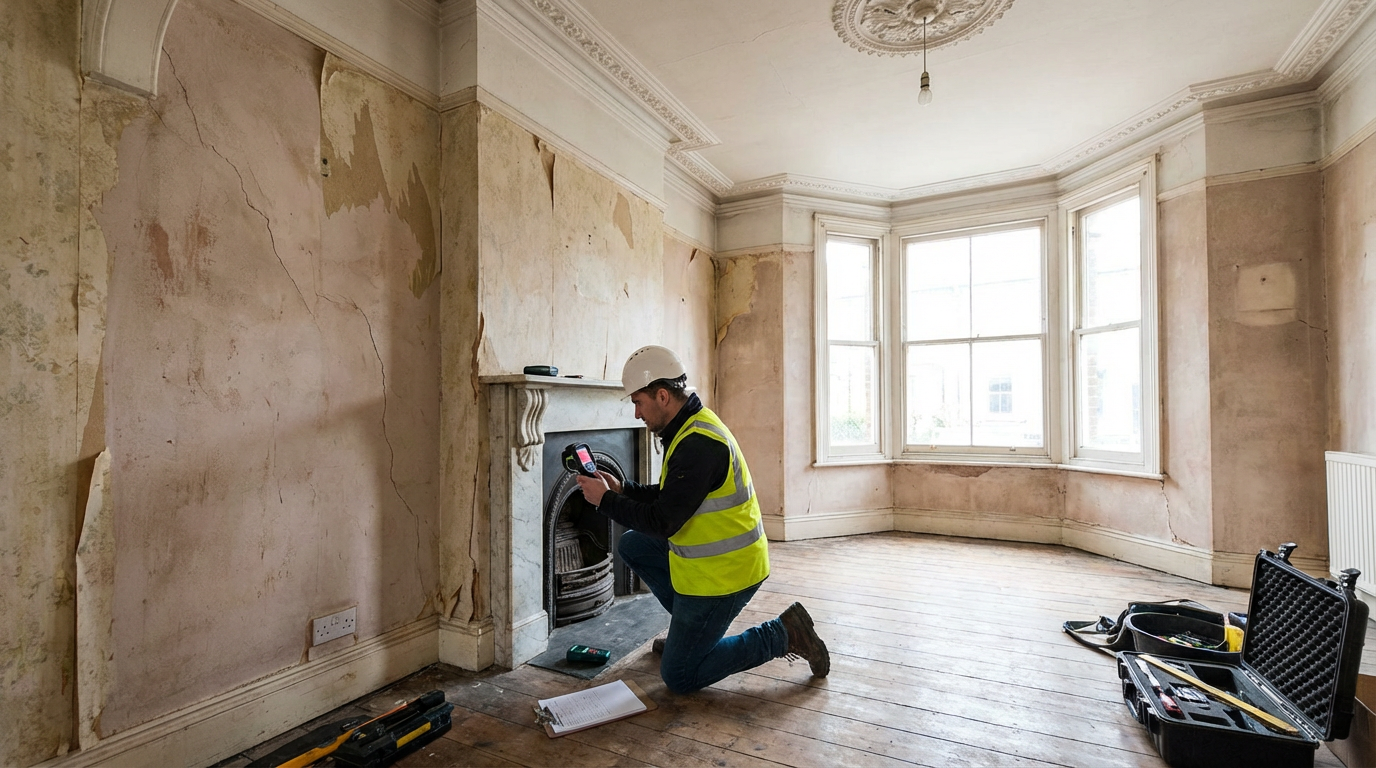
We inspected the property the day before exchange and documented extensively the pre-existing condition: cracked plasterwork throughout, a damaged suspended ceiling, several broken window mechanisms, and evidence of previous water ingress through the flat roof over the rear extension. All of this was documented photographically and incorporated into a schedule of condition that was appended to the lease.
Five years later, when the agency relocated and vacated the premises, the landlord served a schedule of dilapidations claiming £58,000 for repairs — including the very items we had documented in the schedule of condition. Because those items were clearly identified as pre-existing, we were able to reduce our client's liability to £13,000 — a saving of £45,000. The schedule of condition had cost £380 to produce. The return on that investment was, to put it mildly, considerable.
Frequently Asked Questions
Do I need a commercial survey if I'm only taking a short-term lease?
Even for a short-term lease, a schedule of condition is advisable. If the lease contains a full repairing covenant — even for a 12-month term — you could face a dilapidations claim when you leave. The cost of a schedule of condition is minimal compared to the potential liability. We tailor our reports to the scale of the transaction, so a schedule for a small studio will be proportionate in cost and scope.
How long does a commercial building survey take?
The inspection itself typically takes between two and six hours, depending on the size and complexity of the premises. Smaller retail units can be inspected in two to three hours; a multi-storey office building might require a full day. We aim to deliver written reports within five working days of inspection, and within three days for urgent cases.
Can I commission a survey on behalf of my business?
Yes. Camden Surveyors acts for limited companies, partnerships, sole traders, and other commercial entities as well as individuals. We can address our report to the business entity and tailor the scope of the survey to the specific purposes for which it's being used — whether that's for a purchase, a lease, a financing application, or due diligence purposes.
What is a reinstatement cost assessment and do I need one?
A reinstatement cost assessment (RCA) establishes the cost of rebuilding your commercial property from scratch in the event of total destruction — the figure that should be used as the basis for your buildings insurance. Many commercial properties are seriously under-insured because their insurance sum has not been reviewed in line with construction cost inflation. We recommend an RCA every three to five years, or whenever significant works are carried out on the building.
Do you handle dilapidations disputes for landlords as well as tenants?
Yes. Our surveyors have considerable experience acting for both landlords and tenants on dilapidations matters. We prepare schedules of dilapidations for landlords and counter-schedules for tenants, and we can represent either party in RICS-mediated dispute resolution or, if necessary, in court proceedings.
I've been served a terminal schedule of dilapidations. What should I do?
Don't panic, and don't ignore it. Contact a chartered surveyor as quickly as possible — ideally before the lease ends. You have the right to serve a detailed response through your own surveyor, and in most cases the eventual settlement figure will be significantly lower than the initial schedule. Time is of the essence, however: once the lease has ended and the landlord has carried out repairs, your ability to negotiate is considerably reduced.
Need a Commercial Property Survey in Camden?
Our chartered surveyors have extensive experience with Camden's diverse commercial property stock. Whether you need a pre-purchase survey, schedule of condition, or dilapidations advice, we're here to help.