 James Hartley MRICS, Managing Surveyor
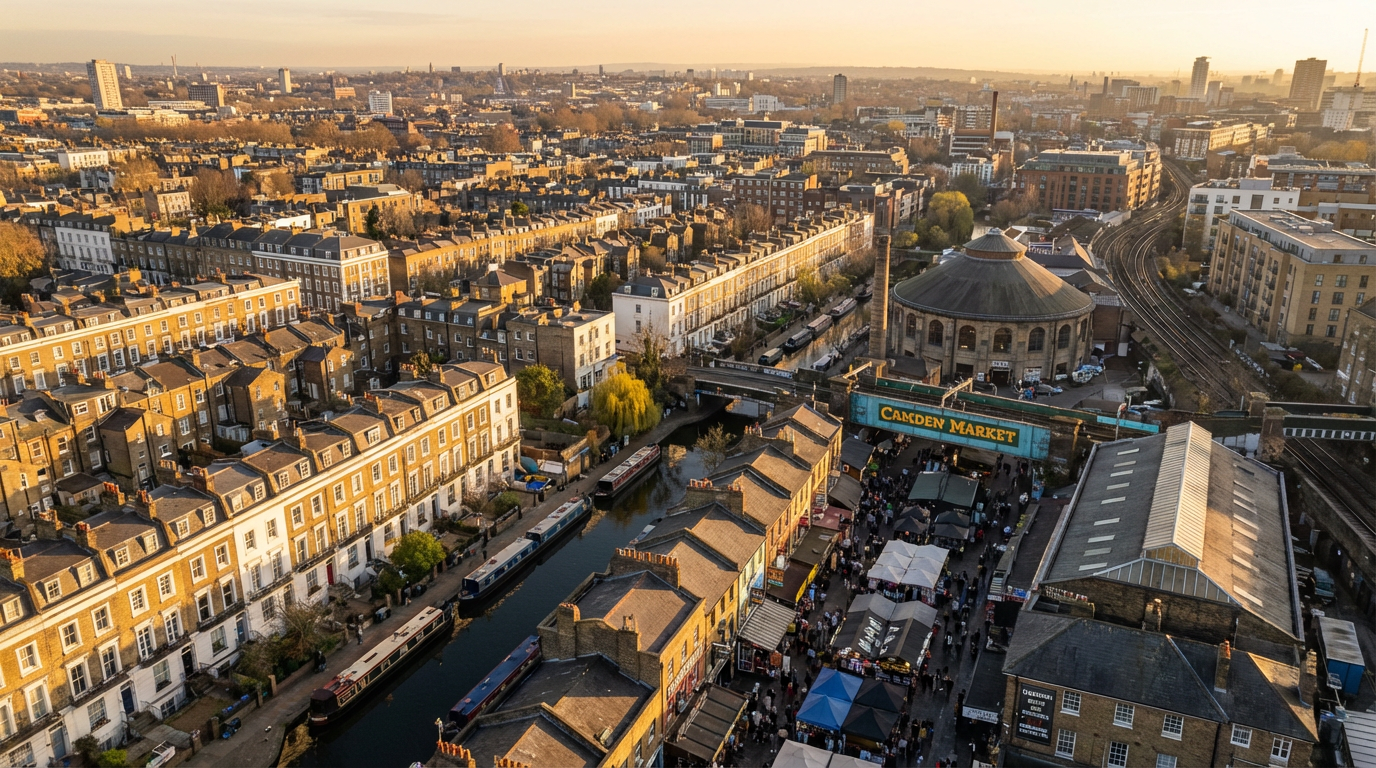
Camden's property market has always been something of a barometer for London as a whole. When confidence is high, Camden prices tend to rise sharply — driven by its unique combination of character housing, strong transport links, and an enduring appeal to both domestic buyers and international investors. When confidence dips, Camden's market is sensitive to the mood shift. So what's actually happening in 2025, and what should buyers and sellers be making of it?
I've been valuing property in Camden for over fifteen years, and I've seen every kind of market condition this area can produce. This article draws on Land Registry data, our own transaction experience, and conversations with local estate agents to give you a grounded picture of where the market stands and — importantly — what it means for your surveying and buying decisions.
In This Guide
The Camden Property Market: An Overall Picture
After a period of price softening through late 2022 and into 2023, Camden's property market has been gradually recovering. The rate base decisions of the Bank of England through 2024 and into 2025 have had a significant impact on mortgage affordability, but Camden — with its large share of cash buyers and higher-income households — has been somewhat more insulated from rate-driven price falls than many London boroughs.
Average property values in Camden remain among the highest in London. Across the borough, the average price paid for a residential property in recent transactions sits in the region of £850,000 to £950,000, though this figure masks enormous variation between the sub-£400,000 leasehold flat market and the multi-million pound houses of Hampstead and Belsize Park.
Average Property Prices by Neighbourhood (Approximate, 2025)
Neighbourhood by Neighbourhood
Hampstead and Belsize Park
These remain Camden's premium residential addresses, with terraced and semi-detached houses regularly achieving £3 million to £7 million. Hampstead's mix of period elegance, green space, and village atmosphere continues to attract wealthy buyers, both British and international. Demand for full Level 3 building surveys is highest here, given the complexity and value of the properties and the scale of the financial commitment involved.
Primrose Hill
One of London's most desirable postcodes, Primrose Hill continues to command a significant premium. The mix of large Victorian and Edwardian terraces draws a mix of families, creatives, and downsizers. Properties here tend to be in better condition than some other Camden sub-markets because of owner-occupation and recent renovation work — but the complexity of the housing stock still demands a detailed survey before exchange.
Camden Town and Chalk Farm
These areas offer better value relative to their geographic proximity to central London and the Northern line. A typical two-bedroom period flat in NW1 can still be purchased for £550,000 to £700,000 in the current market. Buyers in this price range are typically making a significant financial stretch, which makes the case for a thorough building survey even stronger.
Kentish Town
Kentish Town has been gentrifying steadily for the past decade, and that process is continuing. The neighbourhood's stock of Victorian terraces — particularly the larger houses on the western side of the town — has been attracting buyers priced out of Primrose Hill and Belsize Park. Values here have risen sharply over the last five years, and there remains an active market for family houses in the £900,000 to £1.5 million range.
Gospel Oak and Highgate
Gospel Oak remains one of Camden's better-value areas, while Highgate — straddling the Camden and Haringey border — offers a mix of substantial period homes and more modest terraced houses. Both areas have seen steady demand, with buyers attracted by green space (Parliament Hill Fields, Hampstead Heath) and comparatively better value than the NW3 postcode.
Property Types: Who's Buying and What?
Flats and Maisonettes
The flat market in Camden has been more subdued than the house market — a trend that predates the pandemic but has persisted since. Leasehold reform uncertainty, service charge increases, and mortgage availability challenges on high-rise blocks have all played a part. Buyers considering purpose-built flats in particular should instruct a careful review of the leasehold title, service charge accounts, and building insurance before committing.
Conversely, period conversion flats — particularly those in Victorian terraces with long leases remaining — have maintained their appeal. For these properties, a Level 2 Homebuyer Survey is typically appropriate for newer conversions, while older conversions with original features and potentially complex shared structural elements warrant a Level 3 Building Survey.
Terraced Houses
The market for Camden's Victorian and Edwardian terraces remains robust, driven by family buyers who typically intend to hold for the long term. These properties — typically built in the 1870s to 1910s — are magnificent homes when well maintained, but they require ongoing investment. Survey findings on a typical Camden terrace will frequently include: pointing repairs to the external brickwork, remedial works to the chimney stacks, possible damp issues at ground-floor and basement level, and updating of electrical and heating systems.
New Builds
King's Cross and the areas around St Pancras, Somers Town, and the former railway lands have seen significant new residential development. New builds carry specific surveying considerations — snagging surveys in the first two years, and increasing complexity around the fire safety provisions of post-Grenfell legislation for taller blocks.
What Market Conditions Mean for Surveys
The current market has several specific implications for survey demand and the usefulness of survey findings:
More properties being sold as-seen: In a normalising market, vendors are less likely to carry out pre-sale cosmetic refurbishment than they were in the frenzied post-pandemic market. This means buyers may encounter properties in a more honest condition — which makes survey findings more informative and price-renegotiation on the basis of survey findings more common.
Increased lender scrutiny: Mortgage lenders are, in the current environment, paying closer attention to survey valuations. If your surveyor values the property significantly below the agreed price, this can create a mortgage shortfall that either needs to be funded from savings or used as leverage to renegotiate the price.
Greater importance of legal due diligence: With post-pandemic planning applications and permitted development works increasingly coming to light in sales, the legal and planning sections of building survey reports are more important than ever. It's not unusual in today's market to encounter properties where extensions or loft conversions were carried out without building regulations approval, and this needs to be resolved before exchange.
Practical Tips for Camden Buyers in 2025
- Commission a survey at the earliest opportunity. Don't wait until after the mortgage valuation. The valuation is for the lender's benefit, not yours. Commission your own survey as soon as your offer is accepted.
- Choose the right level of survey for your property. See our Level 2 vs Level 3 guide for detailed guidance. As a general rule: if the property is Victorian or older, or if it's had significant alterations, opt for Level 3.
- Use the survey findings to inform negotiations, not just to seek a price reduction. Sometimes the most valuable outcome is a clear understanding of what maintenance the property will need over the next five years, so you can budget accordingly.
- Check the leasehold details carefully for flats. Service charges, ground rent, and the length of the lease all have significant impacts on both value and mortgageability.
- Don't skip the legal due diligence on extensions and alterations. Camden Council has been increasingly active on enforcement of planning and building regulations in recent years.
Frequently Asked Questions
Is Camden property still a good investment in 2025?
Camden has consistently outperformed the London average over the long term, and the structural drivers of demand — transport, schools, green space, cultural amenity — remain intact. Whether it's a good investment for you depends on your specific financial circumstances, the particular property, and the price you pay. A thorough building survey helps ensure you're paying the right price for the condition you're buying.
How do I find out what a property in Camden is worth?
The most reliable starting point is Land Registry data on recent comparable transactions, which is available via HM Land Registry's online portal and through property websites like Rightmove and Zoopla. For a formal RICS Red Book valuation — the type required for probate, divorce, or mortgage purposes — you need to commission a qualified surveyor. See our RICS valuation guide for more details.
Are Camden house prices going up or down in 2025?
Based on the transactions we're involved in and the market data available, Camden prices are broadly stable in 2025, with modest growth in the family house sector and continued pressure on the leasehold flat market. The premium end of the market — Hampstead and Primrose Hill — remains competitive, with well-presented homes attracting multiple offers. We'd recommend treating any confident prediction about short-term price movements with caution — the market can shift quickly in response to monetary policy changes.
Does getting a survey affect my mortgage application?
Your surveyor's valuation, if it's below the agreed purchase price, can affect your mortgage application — specifically, your lender may offer a loan based on the lower valuation, creating a shortfall. However, a thorough survey is in your best interests regardless of this outcome. It's better to discover a valuation discrepancy before you're contractually committed than after. The mortgage valuation is separate from a full building survey — commissioning both is standard practice for buyers buying with a mortgage.
Buying Property in Camden in 2025?
Our RICS chartered surveyors provide Level 2 and Level 3 building surveys across all of Camden's diverse neighbourhoods. Get in touch for a free, no-obligation quote.