 Robert Chen, Building Surveyor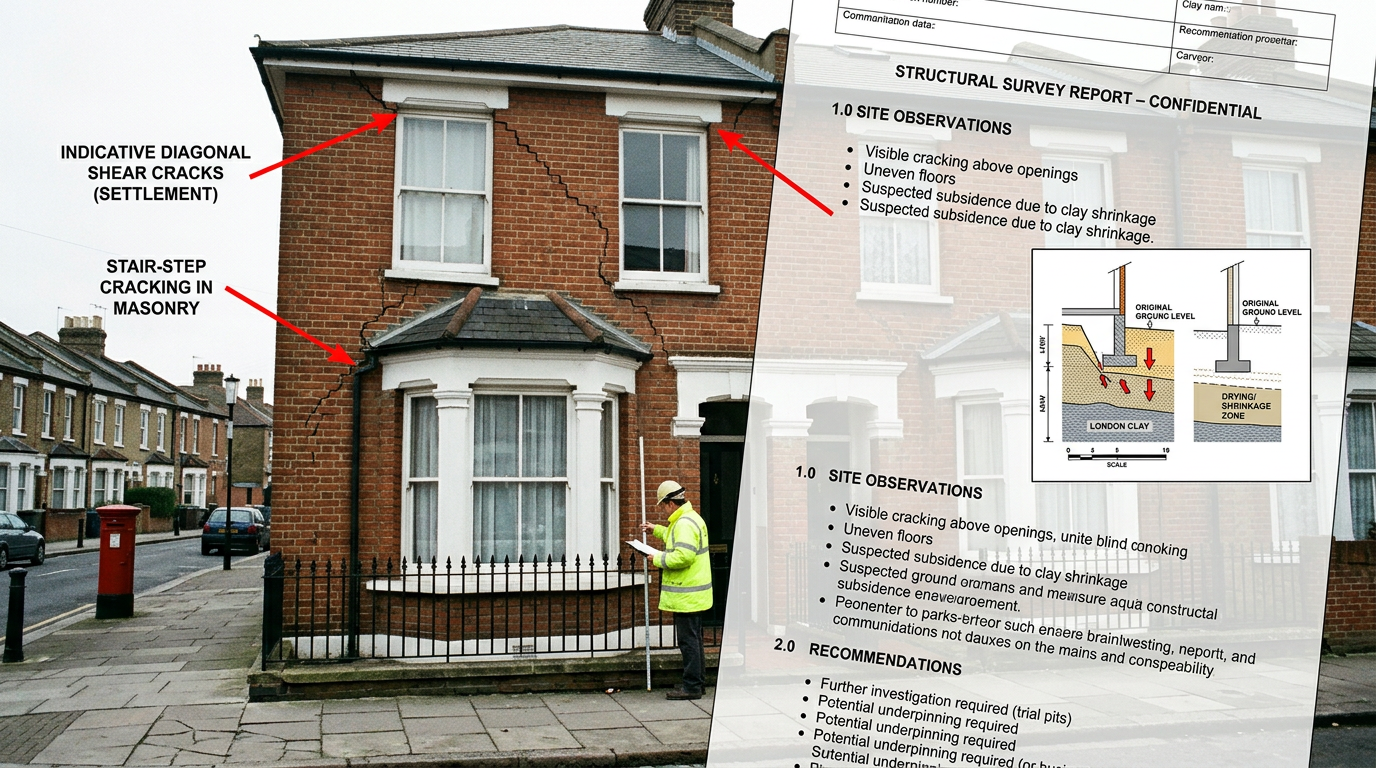
Of all the things that can go wrong with a property, subsidence is the one that triggers the most anxiety in buyers — and with good reason. In serious cases, subsidence can render a building unsafe and cost hundreds of thousands of pounds to rectify. Buildings insurance premiums can skyrocket, and resale can become difficult.
But here's the important nuance: cracking in a building is not automatically subsidence. The vast majority of cracks I encounter in Camden's Victorian properties are the result of normal thermal movement, settlement that occurred long ago and has now stabilised, or localised defects like failed lintels or shrinkage in plasterwork. These are not subsidence, and treating them as such would be an expensive mistake.
My background is in civil engineering before I moved into surveying, which means I approach structural matters with a particularly analytical eye. In this guide, I'll share what I've learned about subsidence in Camden properties — how to spot it, how to distinguish it from other types of cracking, and what to do if you suspect it.
In This Guide
What is Subsidence?
Subsidence is the downward movement of the ground beneath a building's foundations. When the ground under part of the building moves more than the ground under another part, the building experiences differential settlement. This differential movement creates stress in the fabric of the building, which manifests as cracking — typically diagonal, and typically tapering wider towards the top or bottom.
It's important to distinguish subsidence (downward movement of the foundation soil) from heave (upward movement), settlement (initial compression of new-build foundations — a normal process), and structural failure (caused by the building's structure rather than the ground beneath it).
Causes of Subsidence in Camden
The main causes of subsidence in Camden and North London properties are:
- Clay shrinkage: London sits on a thick layer of London Clay, which swells and shrinks significantly with changes in moisture content. In dry summers, clay shrinkage can cause shallow foundations to drop. This is the most common cause of subsidence in London.
- Tree roots: Large trees — particularly willows, oaks, and poplars — extract significant quantities of water from the soil, causing it to shrink beneath nearby foundations. Camden has many large trees in its residential streets.
- Leaking drains: Water from leaking underground drains can wash away or soften the ground beneath foundations, causing erosion-related subsidence.
- Made ground: Some areas of Camden were built over filled land, which can compress unevenly over time.
- Tunnels: Parts of Camden sit above the Northern and Victoria Underground lines. Ground movement associated with tunnelling (historic and ongoing) can cause settlement in overlying structures.
Signs of Subsidence
The key indicators I look for when assessing whether cracking may be subsidence include:
- Diagonal cracking: Typical subsidence cracks run diagonally from the corner of a window or door opening. This is because openings are the weakest points in a wall.
- Tapering width: Subsidence cracks tend to be wider at one end than the other. A crack wider at the top suggests the affected foundation is dropping; wider at the bottom suggests heave.
- Through-wall cracks: Cracks that go right through the thickness of the wall (rather than just the plaster or rendering) are more significant.
- Sticking doors and windows: Distortion of door frames and window casements can be an early sign of movement before visible cracking appears.
- Cracks above and below doors: Step cracking in brickwork following the mortar joints is a classic sign of differential settlement.
Other Types of Cracking (That Aren't Subsidence)
The good news is that most cracks in Camden's Victorian properties are not subsidence. Here are the most common non-subsidence causes of cracking:
- Thermal movement: Seasonal expansion and contraction of materials causes hairline cracks to open and close regularly. These are usually stable and not progressive.
- Lintel failure: A corroded steel lintel over a window or door can expand as it rusts, causing cracking above the opening. Very common in mid-20th century Camden properties.
- Plaster shrinkage: Cracking in plasterwork only (not through to the masonry) is almost always due to the normal drying and shrinkage of plaster and has no structural significance.
- Roof spread: Where roof rafters push outward against the tops of walls, horizontal cracks can appear just below eaves level.
- Historical settlement: Many Victorian buildings underwent a period of settling in their early decades which is long since complete. Wide cracks that are stable, even, and have been repaired and opened multiple times are often historical rather than active.
What to Do If You Spot Cracks
If you spot significant cracking in a property you're considering buying, the right course of action is straightforward:
- Commission a RICS Level 3 Full Building Survey or a Specific Defect Survey focused on the structural movement
- Ask the surveyor to monitor the crack over a period of weeks if necessary to determine whether it is active or historical
- Obtain information from the seller about the history of the cracking and any previous investigations or remediation
- Check whether the property has a buildings insurance history that includes subsidence claims
- If subsidence is confirmed, obtain specialist structural engineer's advice and contractor quotes for remediation before deciding whether to proceed with the purchase
Subsidence and Buildings Insurance
One of the practical complications with subsidence is its impact on buildings insurance. If a property has a history of subsidence — even if it has been successfully underpinned — some insurers will decline to cover it or will charge significantly higher premiums.
Before you commit to a property with a subsidence history, check whether you can obtain buildings insurance at a reasonable premium. Your solicitor should make enquiries about the property's insurance history as part of their conveyancing work.
Subsidence FAQs
Underpinning costs vary enormously depending on the extent of the problem, the method used (mass concrete underpinning, mini-piled underpinning, or resin injection), and the size of the building. As a rough guide, underpinning a single elevation of a Camden terrace might cost £15,000–£50,000, while a whole-house underpinning could exceed £100,000.
Not necessarily. The right response depends on whether the movement is active or historical, the likely cause, the cost of remediation, and the price adjustment you can negotiate. Some subsided properties — particularly those where the movement has been stable for many years — are successfully purchased every year. The key is making the decision with full information, which is exactly what a good structural survey provides.
Worried About Cracking in a Camden Property?
Our specific defect surveys and Level 3 building surveys include detailed structural assessment. Robert Chen provides expert witness reports for property-related disputes. Get in touch today.
Book a Survey