 Sarah Mitchell, Senior Building Surveyor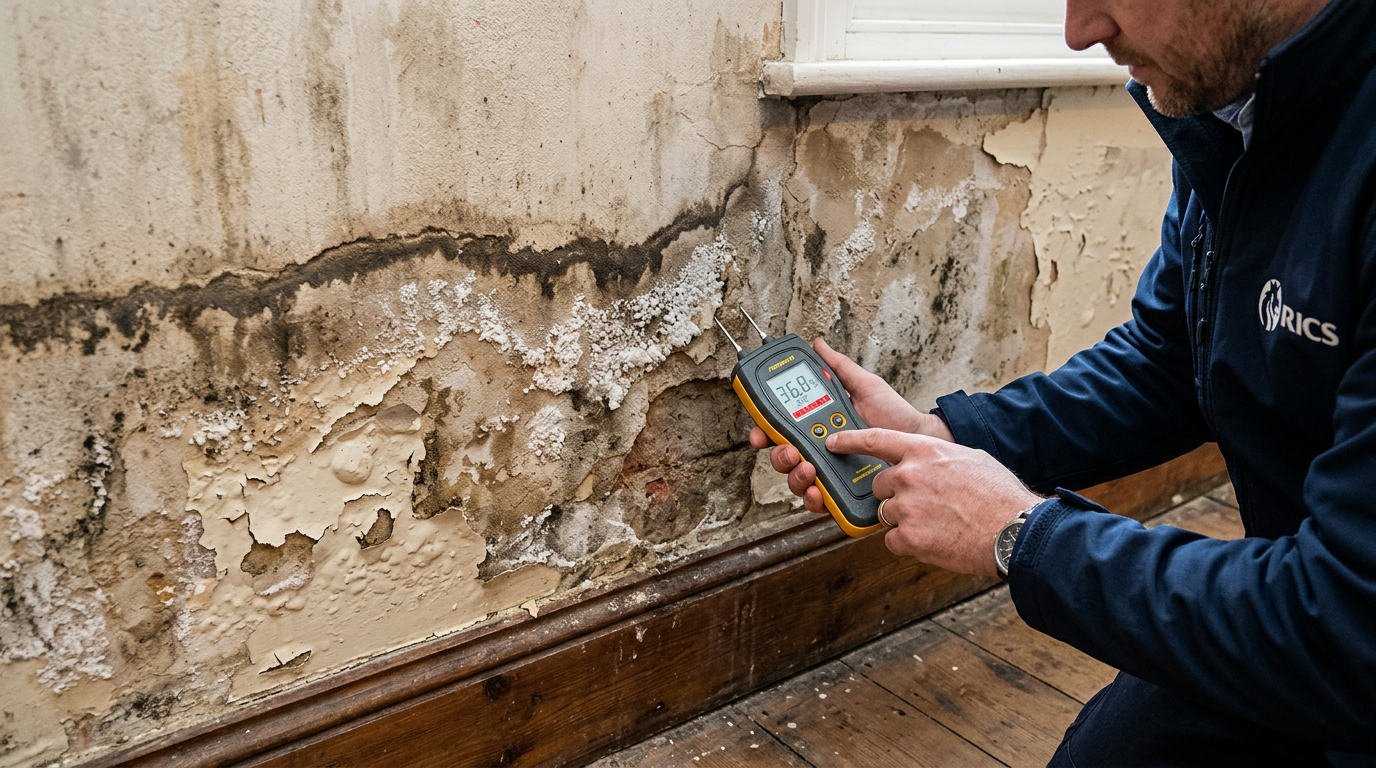
Damp is the word that makes every property buyer's stomach drop when they hear it. And in Camden's vast stock of Victorian properties, it's the issue I encounter more than almost any other. But here's what I want you to know upfront: not all damp is the disaster it first appears to be. The key is understanding what type of damp you're dealing with, what's causing it, and what it will realistically cost to fix.
I've been surveying Victorian properties across Camden for a decade. In that time, I've learned that the biggest mistakes buyers make are either ignoring damp completely (because the fresh paint smell suggested everything was fine) or panicking at the first mention of moisture and walking away from a perfectly good property. This guide is designed to help you avoid both mistakes.
In This Guide
Why Victorian Properties Get Damp
Victorian buildings were designed to breathe. Their solid brick walls — typically 225mm of London stock brick and lime mortar — were built to absorb moisture and then release it as the weather changed. They relied on open fires for heating, which created a constant upward draft through the building that helped evaporate any moisture that accumulated.
The problems start when we interfere with that breathing system. Block the chimneys, seal the floorboards, apply impermeable cement render to the outside, and suddenly the moisture has nowhere to go. It just sits in the walls, causing decay, staining, and eventually structural damage.
This is why the most common source of damp in Camden's Victorian properties isn't a fundamental flaw in the building — it's the result of modern interventions that have disrupted the original building's vapour management system.
The Three Types of Damp
To understand damp, you need to know about its three main manifestations:
- Rising damp: Groundwater wicking up through the base of the wall via capillary action
- Penetrating damp: Rainwater getting through the external envelope of the building
- Condensation: Moisture in the internal air condensing on cold surfaces
Each has different causes, different appearances, and different remedies. Getting the diagnosis wrong is one of the most expensive mistakes you can make in property maintenance — and unfortunately, it happens frequently, particularly when sellers employ damp-proofing companies rather than independent surveyors to diagnose the problem.
Rising Damp
Rising damp occurs when groundwater is drawn up through the base of a masonry wall by capillary action. It's characterised by a distinct tide mark — a horizontal line on the wall at the height to which the moisture has risen, typically below 1.2 metres. Above the tide mark, you'll often see salt crystallisation (efflorescence) as dissolved salts are carried up and deposited as the water evaporates.
Victorian properties were built with various damp-proof courses — slate courses, engineering bricks, bitumen felt — but these can fail or bridge over time, particularly if external ground levels have been raised above the DPC. In many Camden terraces, years of pavement resurfacing have raised external ground levels by 50–100mm, which can bridge an otherwise intact DPC.
Penetrating Damp
Penetrating damp is caused by rainwater getting through the external fabric of the building. In Camden's Victorian terraces, this most commonly occurs at:
- Failed or defective chimney stacks and flashings
- Failed pointing to parapet walls and coping stones
- Defective window reveals and sills
- Failed or overflowing gutters and downpipes
- Defective flat roofs over rear extensions
- Exposed flank walls (common in end-of-terrace properties)
The pattern of penetrating damp differs from rising damp — it tends to be more localised, often higher in the wall, and directly related to the location of the external defect. After heavy rain, penetrating damp often dries out again, whereas rising damp tends to be persistent.
Condensation Damp
Condensation is by far the most common form of damp in residential properties — and also the most frequently misdiagnosed by damp-proofing contractors. Condensation occurs when warm, moisture-laden air meets a cold surface and the moisture precipitates out as water droplets.
In a Victorian property, the most vulnerable spots are cold external walls (especially where furniture has been placed against them), corners (where cold bridging occurs), and north-facing rooms that get little solar gain. Window condensation, black mould growth in corners, and musty odours are all classic condensation indicators.
The remedy for condensation is improved ventilation, heating, and insulation — not a chemical injection DPC. If a surveyor or contractor tells you that black mould in the corner of your bedroom is caused by rising damp and requires a new damp-proof course, I'd be very sceptical.
How Our Surveyors Test for Damp
When we survey a property, we use a range of techniques to diagnose damp accurately:
- Moisture meter readings: A calibrated resistive moisture meter gives us a reading of moisture content in the plaster and masonry. Readings above 20% in plaster warrant further investigation.
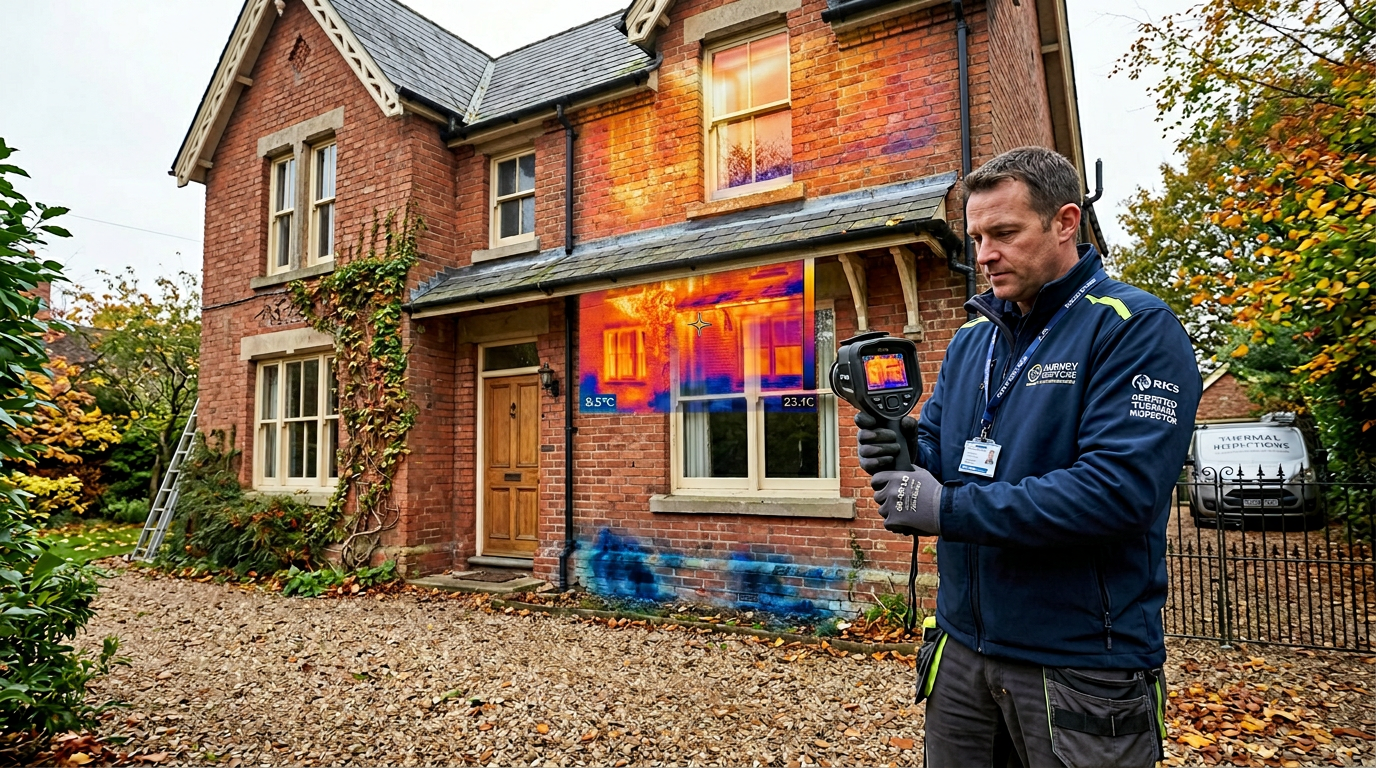
- Thermal imaging: Our thermal imaging camera can identify cold spots and areas of moisture that are not visible to the naked eye — particularly useful for detecting penetrating damp in wall cavities and beneath floors.
- Visual inspection: The pattern, location, height, and appearance of damp staining tells an experienced surveyor a great deal about its cause.
- Probe testing: Where we need to distinguish between genuinely high moisture content in the masonry versus surface decoration, we use a hammer probe to test at depth.
Typical Remediation Costs
- Rising damp (chemical injection DPC): £500–£1,500 per wall, plus replastering costs
- Penetrating damp (chimney/roof repair): £800–£3,000+ depending on access and extent
- Condensation (ventilation improvements): £200–£800 typically
- Failed external render replacement: £1,500–£5,000+ per elevation
Damp FAQs
Not necessarily. The key is understanding the cause and the likely cost of resolution. Minor penetrating damp from a defective gutter is a straightforward fix. Severe rising damp combined with extensive plaster failure and timber decay is a much more significant undertaking. A good survey report will help you make a realistic assessment of the cost and decision accordingly.
Always use an independent surveyor first. Damp-proofing companies are commercial businesses with a financial interest in recommending treatment. An independent RICS surveyor has no such interest and will give you an objective diagnosis. We frequently find that what a damp-proofing company has quoted for chemical injection treatment is actually condensation or penetrating damp that requires a completely different and less expensive remedy.
Worried About Damp in a Property You're Buying?
Our independent specific defect surveys and Level 3 building surveys include a thorough damp investigation using specialist moisture measurement and thermal imaging equipment. Get in touch for a free quote.
Book a Survey