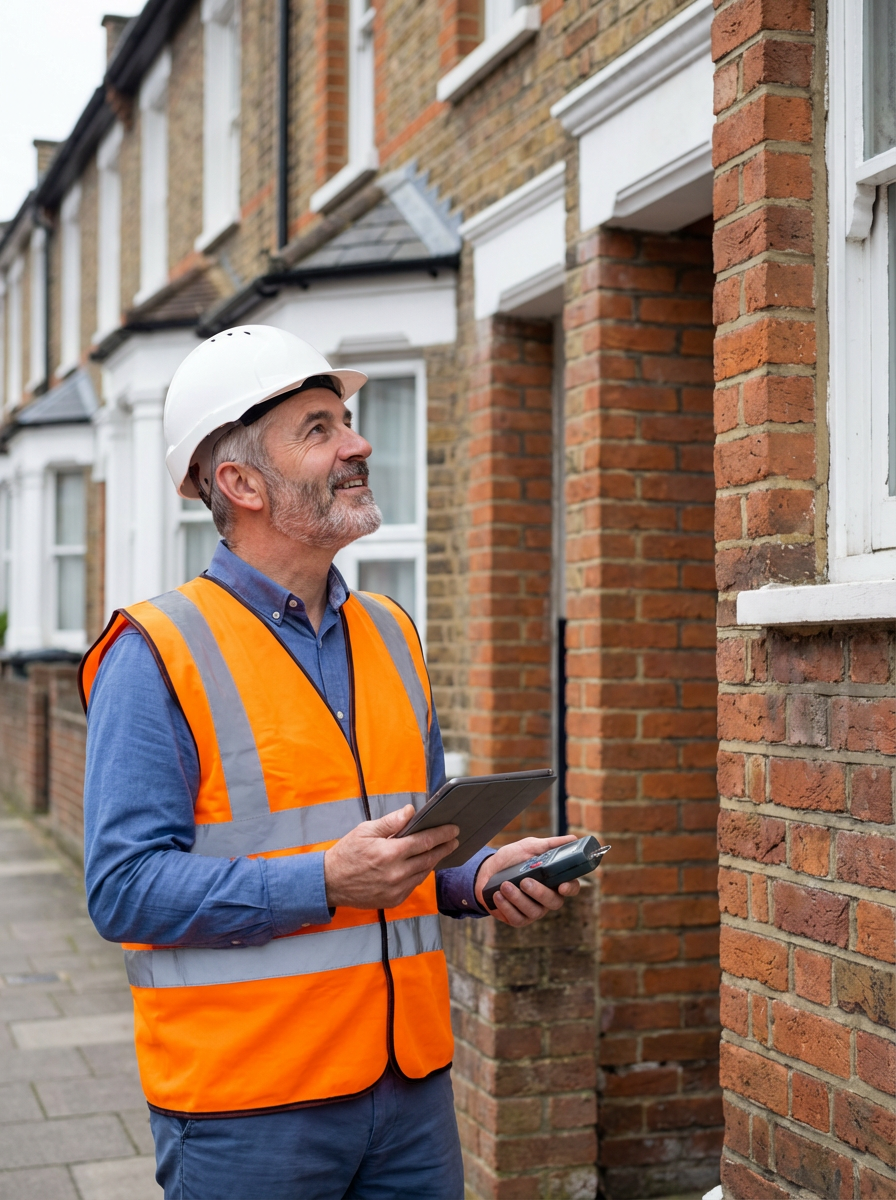
 Robert Chen, Building Surveyor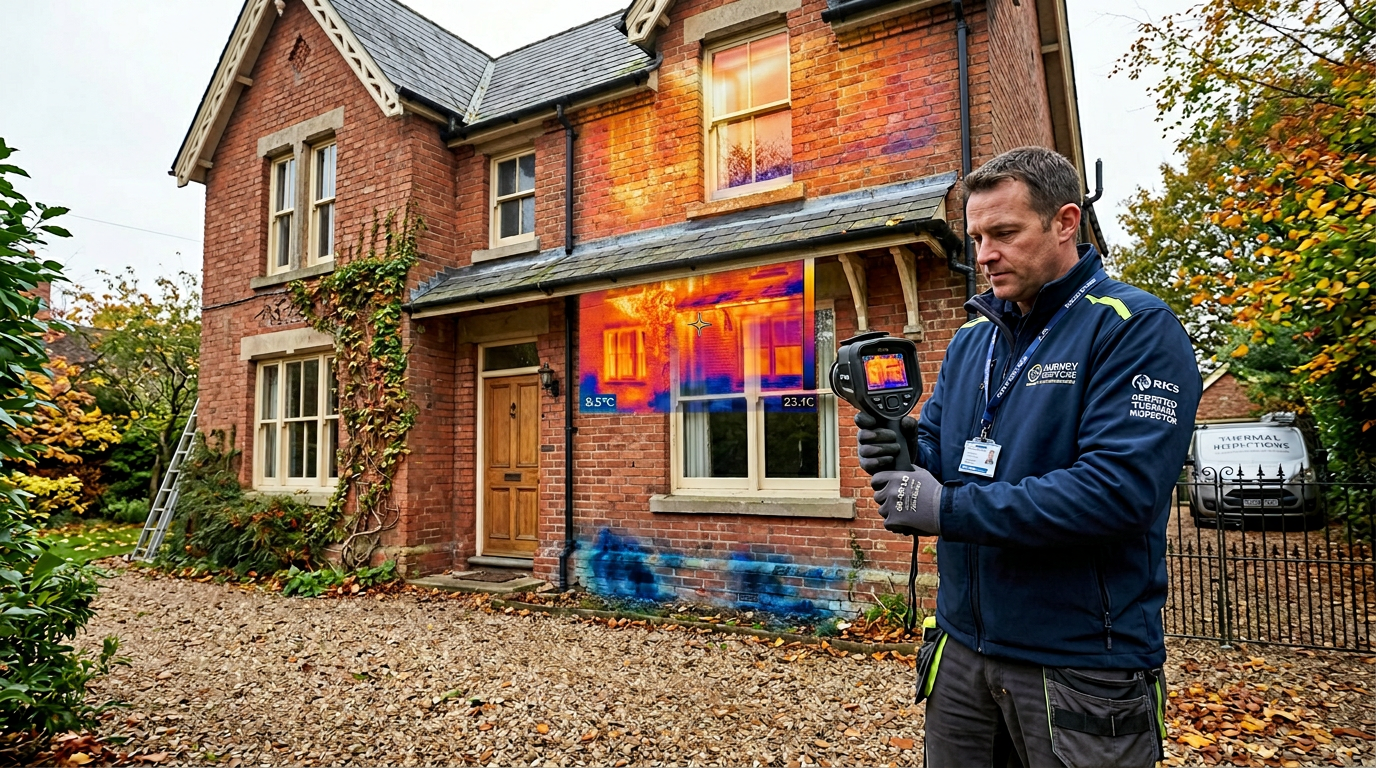
A few years ago, I surveyed a Victorian end-of-terrace in Kentish Town that had recently been refurbished to a high standard — new kitchen, new bathroom, fresh plaster throughout. To the naked eye, the property looked immaculate. But when I pointed my thermal imaging camera at the rear ground floor wall, the screen lit up with the vivid orange-and-blue signature of penetrating damp behind the new plasterboard lining.
The seller hadn't disclosed it. The estate agent hadn't spotted it. And without the thermal camera, I might not have spotted it either — at least not before the buyer had exchanged contracts. That one finding saved the buyer from purchasing a property with a significant hidden defect, and it's one of many examples I could share of thermal imaging technology making a real difference to survey outcomes.
In this article, I'll explain what thermal imaging actually is, how we use it in our Camden building surveys, and what it can (and can't) tell us about a property.
In This Guide
What Is Thermal Imaging?
Thermal imaging cameras — also called infrared cameras — detect the infrared radiation emitted by surfaces and convert it into a visible image that shows temperature differences. Warmer surfaces appear as reds and yellows; cooler surfaces appear as blues and purples. The camera doesn't "see through" walls, but it can detect anomalies in surface temperature that indicate something unusual behind or within the building fabric.
Professional building survey cameras are calibrated to identify temperature differences as small as 0.1°C, making them sensitive enough to detect defects that create only subtle thermal variations in the surface of a wall or ceiling.
How We Use Thermal Imaging in Our Surveys
At Camden Surveyors, we incorporate thermal imaging into our Level 3 full building surveys and specific defect surveys as standard. Here's how we typically use it:
- We scan all external walls, particularly those with a history of water ingress, before and after rain events where possible
- We scan internal walls and ceilings to detect anomalies in thermal performance, which can indicate missing insulation, cold bridges, or moisture accumulation
- We use the camera to follow up on moisture meter readings that suggest elevated moisture content — the thermal image helps us understand the extent and pattern of the moisture
- In commercial surveys, we use thermal imaging to assess flat roof conditions, identify areas of saturated insulation, and inspect service installations
What Thermal Imaging Can Detect
In Camden's older property stock, thermal imaging is particularly valuable for detecting:
- Hidden damp and moisture: Wet areas in walls and ceilings are cooler than dry areas due to evaporative cooling, showing up clearly on thermal images
- Roof and flat roof defects: Saturated insulation in flat roofs retains heat differently from dry insulation, allowing us to identify areas of failure that are not visible externally
- Missing or defective insulation: Cold spots in ceilings and walls can indicate missing insulation in the structure above or behind
- Cold bridges: Areas where the building fabric conducts cold through to the interior surface, which can contribute to condensation and mould growth
- Air infiltration: Gaps in the building fabric through which cold air is entering show up as distinctive cold patterns on internal thermal images
- Service pipe locations: Warm water pipes show up clearly, which can be useful for locating hidden pipework before investigation
Limitations of Thermal Imaging
Thermal imaging is a powerful tool, but it has limitations that are important to understand:
- It detects surface temperature differences — it does not "see through" walls or provide a direct image of what is behind them
- Results can be affected by solar gain (the sun warming external walls during the day masks defects), so survey conditions matter
- Thermal images require interpretation by an experienced surveyor — a cold spot can have multiple causes, and differentiating between them requires contextual knowledge
- It works best in cold weather when there is a significant difference between internal and external temperatures
- It cannot detect all types of defect — it is one tool in the surveyor's toolkit, not a substitute for a comprehensive physical inspection
Best Conditions for Thermal Imaging
The ideal conditions for a thermal imaging survey are:
- Cold outside temperature (5°C or below is ideal) with normal interior heating
- Overcast skies (to minimise solar gain distorting results)
- The building should have been heated normally for 24 hours before the survey
- Recent rain (within 48 hours) helps identify moisture-related anomalies
This means thermal imaging is most effective in autumn and winter — which is actually very convenient for buyers, as this is when many Camden properties come to market. We always try to arrange our Level 3 surveys to make the most of prevailing conditions.
Which of Our Surveys Include Thermal Imaging?
We include thermal imaging as standard in our Level 3 Full Building Surveys and our Specific Defect Surveys when conditions are appropriate. It is particularly valuable for damp investigations, flat roof assessments, and energy performance assessments.
For Level 2 Homebuyer Surveys, we can include thermal imaging as an additional service — please mention this when you enquire.
Thermal Imaging FAQs
For our Level 3 building surveys, thermal imaging is included as standard in our quoted price when conditions allow its use. For Level 2 surveys and specific defect investigations, we include it as part of our standard equipment kit at no additional charge when it is appropriate to the defect being investigated.
Yes — where thermal imaging has been used, we include annotated thermal images in the report alongside conventional photographs, with explanatory text describing what the image shows and its significance. This makes the report much more visual and easier to understand.
Book a Survey with Thermal Imaging
Our Level 3 building surveys include thermal imaging as standard. Get a free quote from our team of experienced Camden surveyors today.
Book a Survey