Roof Maintenance Guide for Camden Homeowners
The roof is your property's first line of defence against the British weather — yet it's also the part most homeowners neglect until something goes badly wrong. At Camden Surveyors, our RICS chartered surveyors inspect hundreds of roofs each year across Camden's Victorian and Edwardian terraces, purpose-built flats, and Georgian townhouses. In this guide, we share everything you need to know about keeping your roof in good condition, spotting problems early, and knowing when to call a professional surveyor.
Why Roof Health Matters for Camden Properties
Camden has one of the most distinctive and architecturally rich housing stocks in London. Most of it was built between 1840 and 1910, which means that a huge proportion of properties in Camden Town, Kentish Town, Hampstead, and Belsize Park are now well over 100 years old. Those roofs — originally finished in Welsh slate, clay plain tiles, or early concrete tiles — have typically been repaired and partially replaced many times over.
The problem is that each repair era tends to introduce a different material. You might find original Welsh slate alongside modern concrete interlocking tiles, all sitting on Victorian timber rafters that haven't been properly inspected in decades. Add in poor ventilation, blocked gutters, failed lead flashings around chimney stacks, and neglected flat roof sections over rear additions, and you have the recipe for significant water ingress — which can lead to structural timber decay, ceiling collapses, and interior damp that takes years to fully dry out.
The good news is that most roof problems are entirely preventable with regular maintenance and professional inspections at the right intervals. Here's what our chartered surveyors recommend.
Common Roof Problems Camden Surveyors See Every Day
After carrying out thousands of Level 3 Full Building Surveys and Level 2 Homebuyer Reports across Camden and Central London, our team has a very clear picture of the most common roof defects affecting this area's housing stock.
1. Slipped or Missing Roof Tiles and Slates
This is by far the most common roof defect we encounter. Original Welsh slate is a wonderful material — durable, thin, and attractive — but its fixing nails corrode over time. Once the nails fail, individual slates begin to slip downwards or fall off entirely. Concrete interlocking tiles, which were popular in the 1970s–1990s, are heavier and can crack or delaminate with age.
Even a single missing tile creates an entry point for rainwater, which can rapidly soak through the underfelt (or, in older properties, there is no underfelt at all) and into the roof timbers. In our experience, many Camden homeowners are unaware their roof has missing tiles until they see a damp patch on their bedroom ceiling — by which time the damage can be significant.
What to do: Have your roof inspected visually from ground level at least twice a year — particularly after autumn storms. If you spot any displaced tiles or slates, arrange for a roofer to replace them promptly. Don't wait for a leak to appear.
2. Failed Ridge and Hip Mortar
The ridge is the apex of your pitched roof where two slopes meet. Ridge tiles are bedded in mortar and, over time, that mortar shrinks, cracks, and eventually falls away — leaving the ridge tiles loose. The same applies to hip tiles on hipped roof sections. Loose ridge tiles are a significant safety hazard (they can fall and injure someone) and also allow wind-driven rain to penetrate the roof structure.
Re-bedding and re-pointing ridge and hip tiles is a relatively straightforward repair, but it's one that many properties in Camden are overdue for. Our surveyors flag failed ridge mortar as a Category 2 or Category 3 defect in the majority of Level 3 survey reports for properties over 30 years old.
3. Blocked or Damaged Gutters and Downpipes
Camden's Victorian properties were fitted with cast-iron gutters and downpipes, which are heavy, prone to rust, and can crack when they freeze in winter. Many properties have since been fitted with UPVC replacements — lighter and maintenance-free, but prone to sagging and joint failure if not properly supported.
Blocked gutters are one of the most common causes of damp in older London properties. When gutters overflow, water runs down the face of external walls rather than being directed away from the building. Over time, this causes the external render or pointing to deteriorate, and water eventually begins to penetrate the wall cavity. In solid-wall Victorian properties — which have no cavity — it can go straight through.
Our advice: clean your gutters at least twice a year (spring and autumn), and have any sagging sections or leaking joints repaired immediately. If your property still has original cast-iron gutters, consider having them cleaned, rust-treated, and painted — they are often superior in quality to modern UPVC if properly maintained.
4. Flat Roof Failures
Most Camden terrace houses and maisonettes have at least one flat or near-flat roof section — typically over a rear kitchen or bathroom extension, a bay window, or a garage. Flat roofs are almost universally covered in felt, GRP fibreglass, or bitumen, and they have a finite lifespan of roughly 10–25 years depending on the system and quality of installation.
The most common flat roof defects we see are:
- Felt blistering: Trapped moisture expands in summer heat, causing felt to bubble. Once blisters burst, the felt is compromised and water can enter.
- Ponding water: Flat roofs must have a slight fall (gradient) to drain. If the fall has been lost — due to timber deflection or poor installation — water ponds on the surface and accelerates deterioration.
- Failed edge trims and upstands: Where a flat roof meets a wall or parapet, the waterproofing must be turned up and secured. Failed upstands are a very common point of water entry.
- Split or cracked felt: Older bitumen felt becomes brittle over time and cracks, particularly along joints and laps.
If your property has a flat roof section that is more than 15 years old, our chartered surveyors would strongly recommend a detailed inspection as part of a Specific Defect Survey before the issue becomes an emergency repair.
5. Lead Flashing Failures Around Chimneys and Parapet Walls
Lead flashing is the thin lead sheet used to waterproof the junction between a roof covering and a vertical surface — most commonly around chimney stacks, dormer windows, and parapet walls. Lead is an excellent material for this purpose, but it does have weaknesses:
- Lead expands and contracts significantly with temperature changes. Over time, this causes it to crack at stress points.
- The mortar chases (grooves cut into brickwork to hold the lead) open up with age, allowing the lead to pull away from the wall.
- Lead theft remains a problem in London — particularly on church roofs and some higher-value residential properties.
Failed chimney flashing is one of the most common causes of water ingress we identify in the roof space of Camden properties during Level 3 surveys. The water typically tracks along the roof timbers and appears as a damp patch on an internal ceiling, often some distance from the actual point of entry — making it difficult for homeowners to identify without specialist knowledge.
Camden Surveyors Explain: How We Inspect a Roof
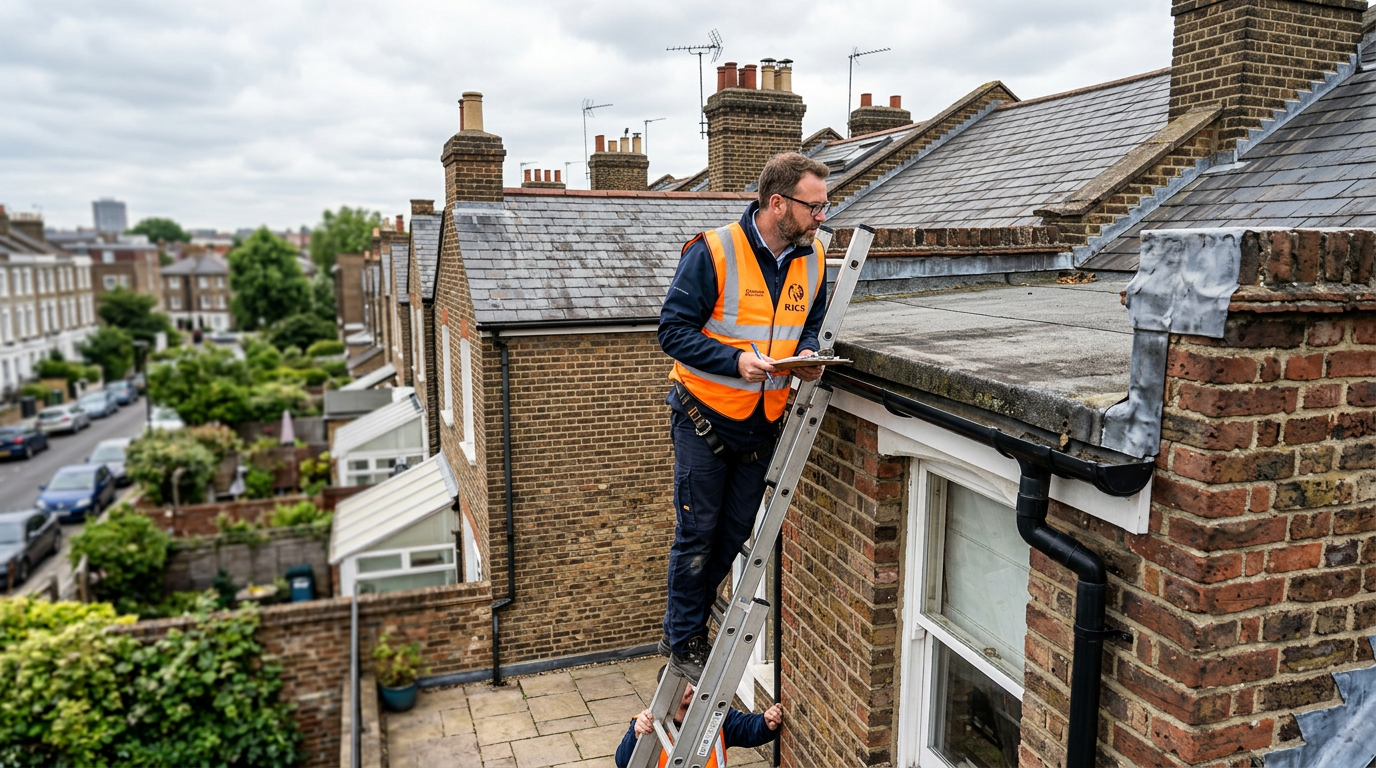
When our RICS chartered surveyors carry out a property survey, the roof inspection follows a systematic process. Understanding what we look for can help homeowners carry out their own basic checks.
External Inspection
We begin from the ground, using binoculars to inspect the full extent of the roof covering, ridge, hips, verges, eaves, gutters, downpipes, and any visible flashings. We look for:
- Missing, slipped, cracked, or delaminating tiles or slates
- Failed ridge and hip mortar
- Moss and lichen growth (which retains moisture and accelerates tile decay)
- Gutter blockages, sagging, or overflow marks on external walls
- Visible lead flashing condition around all penetrations
- Condition of any flat roof sections visible from ground level
- Evidence of previous repairs (patches, different tile types, new felt strips)
For a Level 3 Full Building Survey, where safe access is available, we will also carry out a closer inspection of accessible roof areas and, critically, an internal inspection of the roof space.
Internal Roof Space Inspection
The roof space (loft) inspection is one of the most valuable parts of a Level 3 building survey and it's one that only a Level 3 survey includes as standard. From inside the roof space, we can assess:
- The condition and span of roof timbers (rafters, purlins, ridge board, ceiling joists)
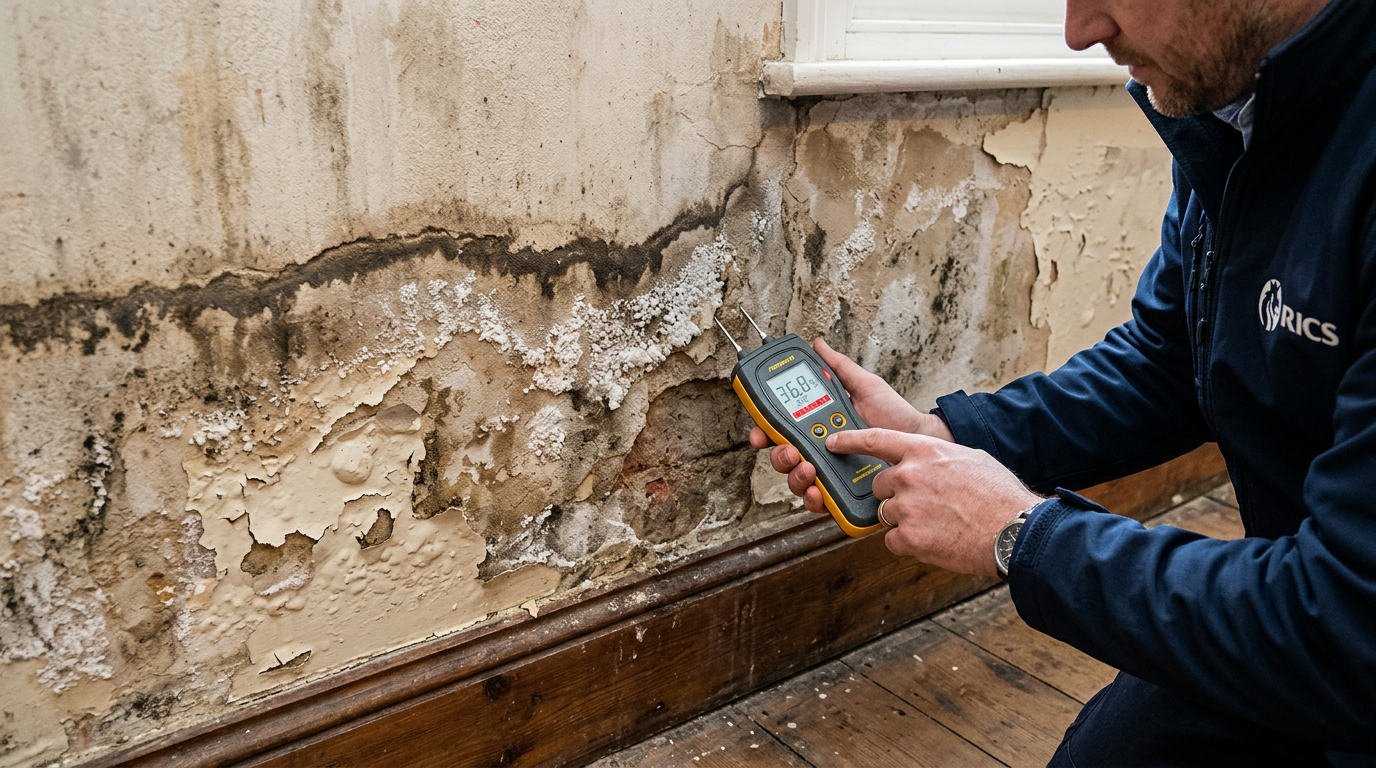
- Evidence of active water ingress — wet timber, staining, mould growth, or rot
- Evidence of historic repairs or structural modifications
- Roof covering underlay condition and whether it is present at all
- Insulation depth and condition
- Ventilation adequacy — insufficient ventilation leads to condensation on roof timbers
- Any signs of vermin activity (mice, squirrels, or birds nesting)
This internal inspection regularly uncovers defects that are completely invisible from the outside — including areas of active leak that have not yet caused visible ceiling damage. In our experience, the roof space inspection saves buyers money by identifying issues that could have cost tens of thousands of pounds if left undetected.
Flat Roofs vs Pitched Roofs in Camden: What Should You Know?
Camden's housing stock features both pitched and flat roof sections — often on the same building. Understanding the key differences helps you prioritise maintenance.
Pitched Roofs
A well-maintained pitched roof with high-quality slate or plain clay tile can last 80–150 years. The key maintenance requirements are:
- Replace individual broken or slipped tiles promptly
- Re-bed and re-point ridge and hip tiles every 20–30 years
- Clear moss growth every 5–10 years using biocide treatment
- Maintain gutters and downpipes annually
- Check and repoint flaunching around chimney pots every 20 years
- Check lead flashings every 10 years and re-dress or re-fix as needed
Flat Roofs
Flat roofs require more frequent inspection and have a shorter lifespan. Our maintenance recommendations:
- Clear debris (leaves, dirt) from flat roof surfaces and outlets at least twice a year
- Inspect felt/membrane surface annually for blisters, cracks, and ponding
- Check upstands and edge trims annually
- Plan for full replacement every 15–25 years depending on system
- Consider upgrading to a modern single-ply membrane (GRP fibreglass or EPDM rubber) which offers superior durability
Roof Surveys and Building Surveys: What's the Difference?
A common question our clients ask is whether they need a specialist roof survey or whether a standard building survey is sufficient. Here's our honest answer:
For most property purchases in Camden, a RICS Level 3 Full Building Survey is the right choice. It includes a comprehensive inspection of all roof elements — both externally and internally within the roof space — and provides detailed condition ratings, maintenance recommendations, and cost guidance where defects are identified.
A specialist roof survey (carried out by a roofing contractor) may be more appropriate if:
- You already own the property and have a specific concern about the roof
- Your building surveyor has flagged a potential roof defect and you need a more detailed assessment before commissioning repairs
- You are planning a significant roof repair or replacement and need a detailed specification for contractors to price against
For existing homeowners who are not in the process of buying or selling, our Specific Defect Survey service is ideal. Our chartered surveyors will inspect the specific element of concern (the roof, a particular area of damp, or a structural concern) and provide a detailed written report with repair recommendations and indicative costs.
Chimney Stacks: The Roof Element Most Homeowners Overlook
Camden's Victorian terrace houses were built with multiple chimney stacks — and in most properties, only one or two of these are still in active use (if any). The remainder have been capped or left open, often with no maintenance for decades.
Disused chimney stacks are one of the most consistently neglected elements of Camden properties. Common problems include:
- Failed flaunching: The cement mortar cap that holds chimney pots in place. When it cracks, pots become loose — a serious safety risk.
- Spalling brickwork: Freeze-thaw cycles cause soft Victorian bricks to spall and crumble, leading to progressive structural decay.
- Failed flashing: As described above, the most common cause of roof-level water ingress.
- Blocked flues: Disused flues can harbour nesting birds, which can block the flue and create fire risks if the chimney is later brought back into use.
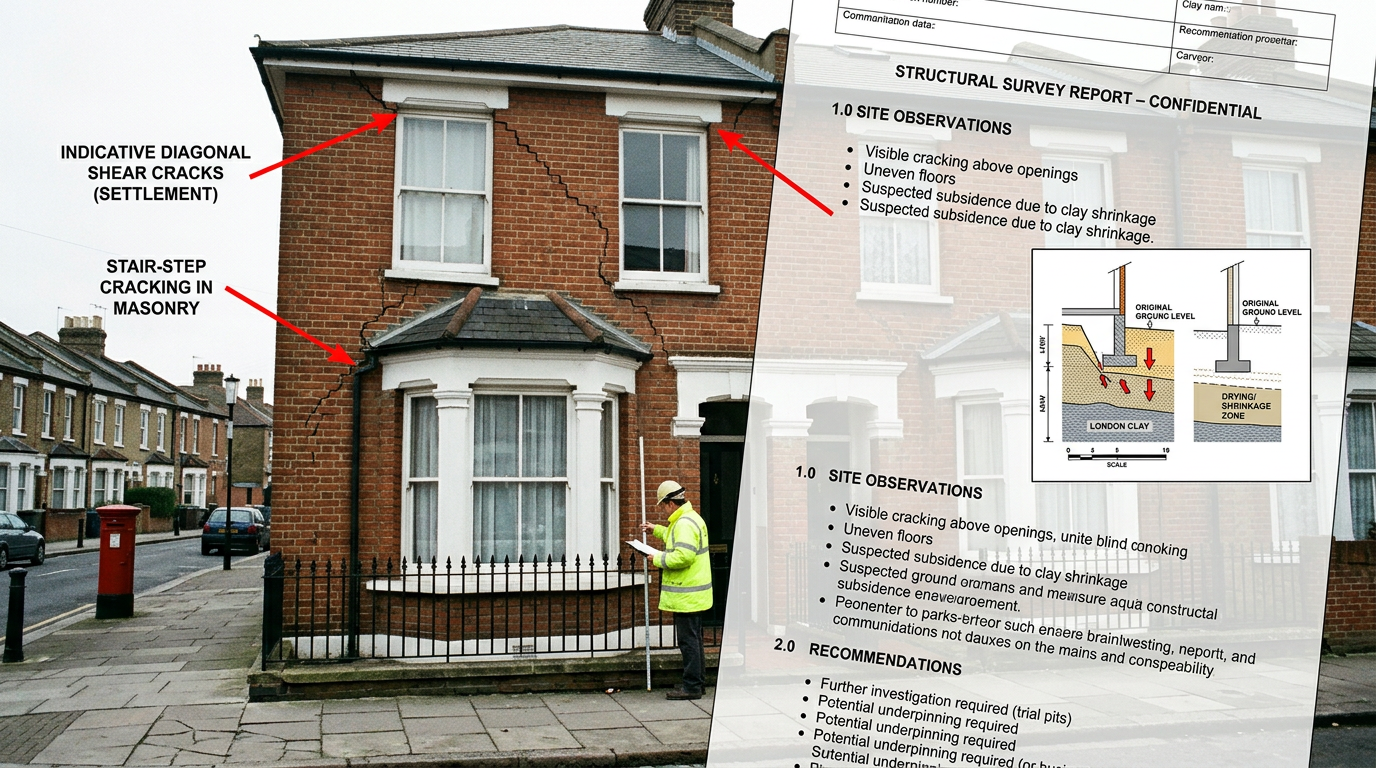
- Structural lean: Tall chimney stacks can develop a lean due to differential settlement or failed bonding. This requires urgent structural attention.
Our advice: if your property has chimney stacks, make sure they are inspected as part of your regular property maintenance programme. Even if the chimneys are capped and unused, they still require periodic inspection and maintenance to prevent costly problems developing.
When Should You Book a Roof Inspection in Camden?
Our chartered surveyors recommend booking a professional roof inspection in the following circumstances:
- Before purchasing a property: Always commission a RICS Level 2 or Level 3 survey before exchanging contracts. This is especially important for Victorian and Edwardian properties where original roof materials may be approaching the end of their serviceable life.
- After a severe storm: High winds and heavy rain can dislodge tiles, damage flashings, and block gutters. Arrange a roof inspection promptly after any significant weather event.
- If you notice a damp patch on a ceiling: Don't ignore it — damp patches on ceilings almost always indicate a roof leak or plumbing issue, both of which need prompt attention.
- Every 5 years for newer properties, every 2–3 years for Victorian stock: A proactive inspection programme is far cheaper than reactive repairs.
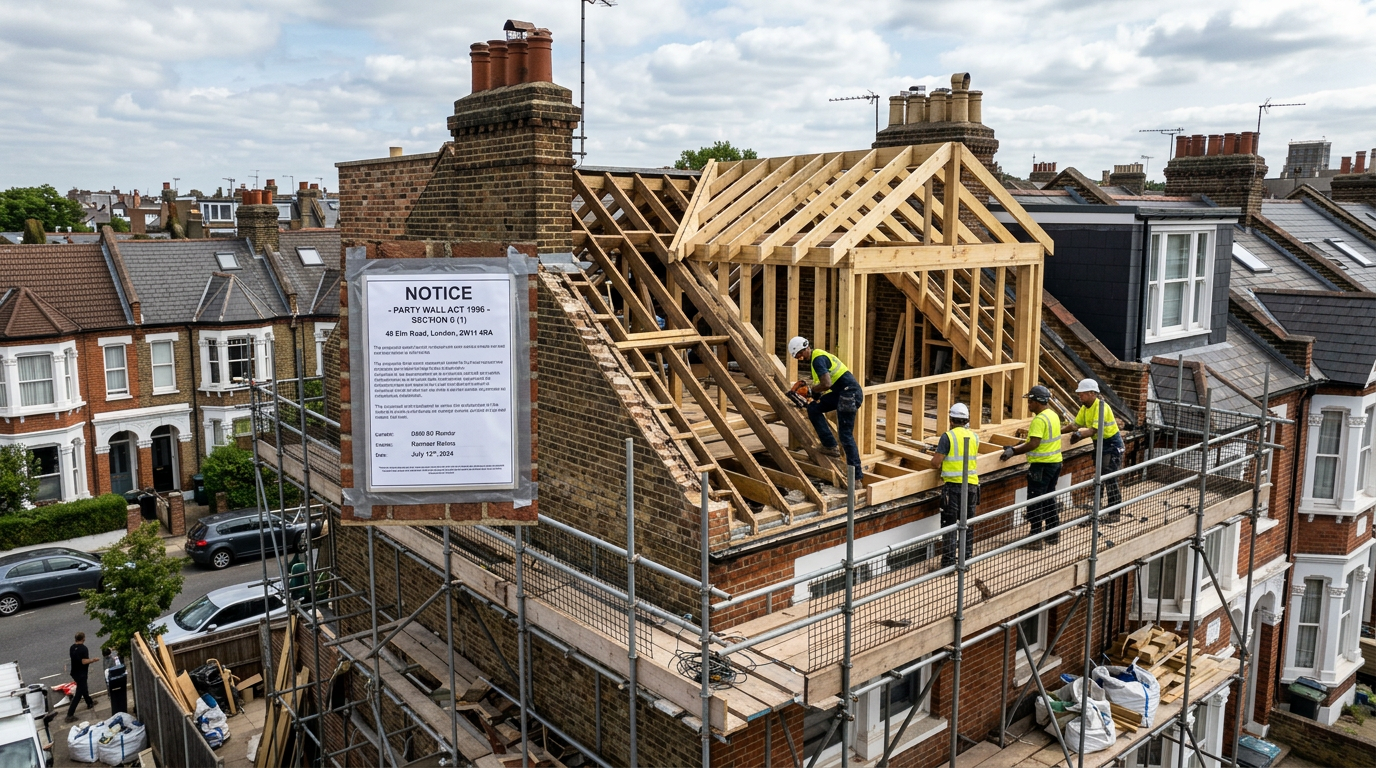
- Before or after major works: If you are planning a loft conversion, extension, or significant internal renovation, have the roof inspected beforehand. Our loft conversion guide covers this in more detail.
- When buying a lease extension or selling your property: A pre-sale survey — including the roof — helps you address any defects before they become a buyer's chip for renegotiation.
DIY Roof Checks: What Camden Homeowners Can Do Themselves
While a professional inspection is always recommended for a comprehensive assessment, there are some basic checks that any homeowner can carry out safely from ground level. Never attempt to walk on your roof without professional training and the correct safety equipment.
Ground-Level Visual Checks
- Stand back from the property and use binoculars to scan the full roof surface. Look for missing tiles, slipped slates, damaged ridge tiles, and moss growth.
- Check gutters for overflow marks (green or black algae staining on external walls below the gutterline) and visible blockages from below.
- After rain, watch for water spilling over the gutterline — a clear sign of blockage.
- Look at chimney stacks for visible cracks, loose pots, or areas where lead flashing appears to be pulling away from the brickwork.
Internal Checks From the Loft
If you can safely access your loft space, inspect it during daylight hours with a torch:
- Look for daylight penetrating through the roof covering — any visible light (other than from vents) indicates a gap in the roof.
- Check timber surfaces for water staining, wet patches, or mould growth, paying particular attention to areas around chimney stacks and valleys.
- Look for signs of condensation — widespread dampness on timber surfaces, particularly in poorly ventilated loft spaces.
- After heavy rain, check for active drips or wet patches on the underside of roof sarking boards or underfelt.
Frequently Asked Questions: Roof Surveys & Maintenance in Camden
How often should I have my roof inspected in Camden?
Most RICS surveyors recommend a professional roof inspection every 5 years for properties under 20 years old, and every 2–3 years for Victorian or Edwardian properties. You should also arrange an inspection after any severe storm, or if you notice leaks, damp patches on ceilings, or missing tiles.
What are the most common roof problems in Camden's Victorian terraces?
The most frequent roof defects in Camden's older housing stock include slipped or missing Welsh slate tiles, failed ridge and hip mortar, blocked or cracked cast-iron gutters, lead flashing failures around chimney stacks, and deteriorating flat roof coverings over rear additions.
Does a RICS Level 2 survey include the roof?
Yes. A RICS Level 2 Homebuyer Survey includes a visual inspection of the roof covering, ridge, verges, eaves, gutters, and downpipes from ground level using binoculars. A Level 3 Full Building Survey goes further — the surveyor will inspect the roof space internally and report on the roof structure, insulation, and any evidence of water ingress.
How much does it cost to repair a flat roof in London?
Minor flat roof repairs (patching felt blisters or resealing joints) typically cost £300–£800. A full flat roof replacement using modern GRP fibreglass or EPDM rubber systems generally ranges from £1,500 to £5,000+ depending on size. Always get three quotes from contractors who specialise in flat roofs.
Can I claim on my home insurance for a roof leak?
This depends on the cause. Storm damage (e.g., tiles blown off) is usually covered. Gradual wear and tear or lack of maintenance is not. A RICS surveyor can produce a Specific Defect Report that documents the cause of damage — this is often required by insurers when making a claim.
What is lead flashing and why does it fail?
Lead flashing is a thin strip of lead sheet used to waterproof the junction between a roof covering and a vertical surface, such as a chimney stack or a parapet wall. Over time, lead can crack due to thermal movement, become detached from its mortar chase, or be stolen. Failed flashing is one of the most common causes of water ingress in older London properties.
Related Articles
Concerned About Your Roof?
Our RICS chartered surveyors provide Level 2 Homebuyer Reports, Level 3 Full Building Surveys, and Specific Defect Reports for roof and structural issues across Camden and Central London.
Get a Free Quote Our Services